How to Measure Your Height Accurately at Home (5 Steps)
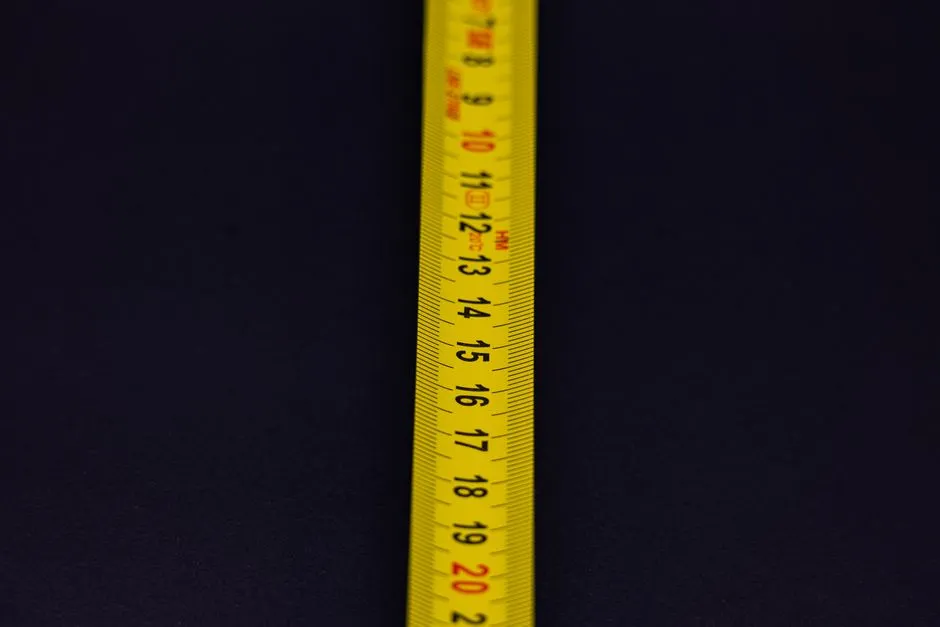
How to Measure Your Height at Home
To measure your height accurately, stand barefoot on a hard, level floor with your back against a wall, heels together and touching the wall. Look straight ahead, rest a flat object level on the crown of your head, mark where it meets the wall, then measure from the floor to the mark with a tape measure. Measure at the same time of day each time — height drops slightly as the day goes on.
That's the whole method. The rest of this guide covers each step, the mistakes that quietly add or subtract a centimeter, and how to do it solo.
What you need
- A hard floor. Carpet compresses under your heels and can inflate the reading. Tile, wood, or laminate is best.
- A wall with no baseboard bulge at the spot you'll stand, so your heels can actually touch it.
- A flat, rigid object — a hardcover book, a box, or a carpenter's square. This is your stand-in for a stadiometer's headpiece.
- A pencil and a tape measure (a metal one stays straighter than a sewing tape).
The 5 steps
- Prepare. Take off shoes, socks with thick soles, hats, and bulky hairstyles or clips. Anything between your head and the flat object gets counted as height.
- Stand correctly. Back to the wall, heels together and touching it. Your shoulder blades and buttocks should lightly touch the wall too. Legs straight, arms relaxed at your sides.
- Level your head. Look straight ahead at eye level, not up or down. Clinicians aim for a position where the bottom of the eye socket and the top of the ear canal are roughly level with each other — in practice, "chin level, eyes forward" gets you there. Tilting the chin up is the most common error and it changes the reading.
- Mark the wall. Have a helper press the flat object gently onto the crown of your head, keeping it level against the wall — not tilted. Mark the wall at its bottom edge, then step away.
- Measure the mark. Run the tape from the floor straight up to the mark, keeping it vertical and taut. Read at eye level. Repeat the whole process once or twice; if readings differ, take the average.
Measuring by yourself
No helper? Same setup, one change at step 4: hold the flat object with both hands, press it lightly to the crown of your head, and slide it back until it touches the wall while keeping it level. Hold it in place, duck out from under it carefully, and mark the wall at its bottom edge. Solo readings are a bit less reliable — the object tends to tilt — so repeat the measurement two or three times and average.
A wall-mounted growth chart works the same way; the printed scale simply replaces the pencil mark.
Common error sources at a glance
| Error source | Direction | Fix |
|---|---|---|
| Shoes or thick socks | Reads taller | Measure barefoot |
| Hair volume, buns, hats | Reads taller | Flatten or remove |
| Carpet underfoot | Reads taller | Use a hard floor |
| Chin tilted up | Reads taller or shorter | Eyes level, look straight ahead |
| Slouching or bent knees | Reads shorter | Heels, hips, shoulders to the wall |
| Tilted headpiece | Either | Keep the flat object level |
| Sagging tape measure | Reads taller | Keep tape vertical and taut |
Why you're shorter at night
Your height genuinely changes over the day. The discs between your vertebrae contain fluid; gravity compresses them while you're upright, and they rehydrate and expand while you lie down overnight. Most people measure somewhere around one to two centimeters (roughly half an inch or a bit more) taller first thing in the morning than late in the evening. It isn't a measurement error — it's normal spinal compression.
The practical takeaway: always measure at the same time of day. Mid-morning to midday is a reasonable standard, since the fastest shrinkage happens in the first hours after getting up.
Tracking height over time
One careful measurement tells you where you stand today; repeated measurements under identical conditions tell you whether anything is changing. That matters most for kids and teens still on their growth timeline — see when people typically stop growing for the age ranges involved, and browse our growth science guides for what actually influences adult height. For adults, expect the number to be stable apart from that daily up-and-down; measure a few times and trust the pattern, not any single reading.